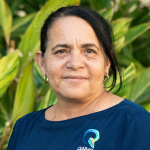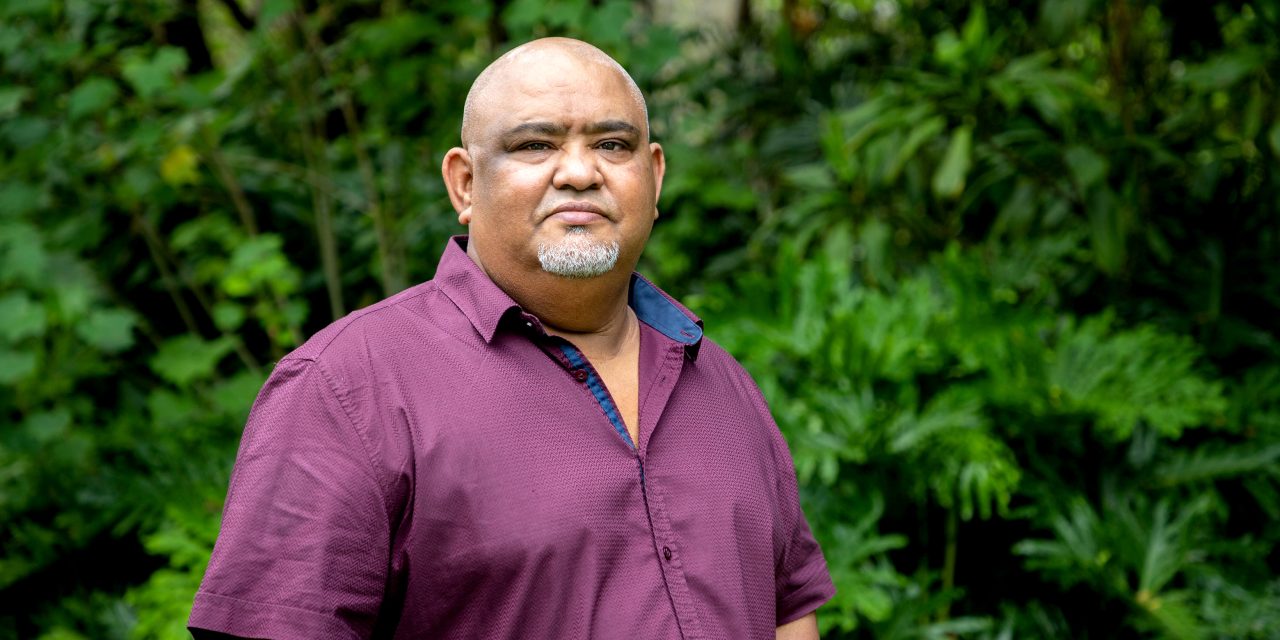
Cleveland Fagan. Image: QAIHC
Cleveland Fagan
Cleveland Fagan was a proud Djabugay man with connections to Cairns, Yarrabah, Kuranda, Mareeba and Cape York. From an early age, he knew his life’s work would be dedicated to serving Aboriginal and Torres Strait Islander people. He understood health wasn’t just the absence of illness, it was shaped by physical, social, emotional, spiritual and community factors and addressing it meant tackling not just illness but the social determinants of health.
Throughout his career, Cleveland was a fearless advocate and a champion of self-determination, ensuring Aboriginal and Torres Strait Islander communities had a seat at the table with governments on health matters that impacted them.
Before stepping into the ACCHO sector, Cleveland held positions with the Commonwealth Department of Health and Aging, Queensland Health and the North Queensland Land Council, working with community on issues like cultural heritage, economic development and land management.
Cleveland was brought on as CEO of a struggling Apunipima Cape York Health Council in 2006. Under his leadership, Apunipima transformed from an advocacy body to a primary healthcare service provider, expanding its footprint to 17 communities in the gulf and cape regions. In doing so, he tripled Apunuipima’s workforce and income before his departure 11 years later — a testament to his vision and leadership.
In 2020, Cleveland became CEO of the Queensland Aboriginal and Islander Health Council where he championed community control and self-determination in Aboriginal and Torres Strait Islander health matters. He played a pivotal role in major reforms to Queensland’s hospital system, following QAIHC-commissioned research that exposed systemic racism in every public hospital in Queensland.
His advocacy led to the Palaczszuk government implementing health equity legislation that required each hospital and health service in Queensland co-develop a health equity strategy with the region’s ACCHOs — a milestone achievement for Aboriginal and Torres Strait Islander health.
Cleveland resigned from QAIHC in late 2023 to focus on his health and his work with the Yarrabah Leaders Forum, an organisation he helped form in 2016. His advocacy for Yarrie saw him assist Gindaja Treatment and Healing Indigenous Organisation secure nearly $11 million in infrastructure funding.
He also advocated for Gurriny Yealamucka Health Service to transition from a government-run entity to a community-controlled managed health service; the first instance of this in Australia.
Tragically, Cleveland passed away suddenly in June of 2024, just a week before the Yarrabah Leaders Forum was incorporated as a legal entity. However, his legacy lives on through the improved health and wellbeing of Aboriginal and Torres Strait Islander communities across Queensland, including some of the state’s most remote and underserved communities.
Cleveland’s proudest legacy was his family: his wife Ruth, daughters Clevanna and Sara, his grandkids, father Dr Bernard Singleton and his siblings Jason, Royden, Louise and Bernie.
Cleveland’s daughter, Sara accepted his posthumous Hall of Fame award on behalf of his family.