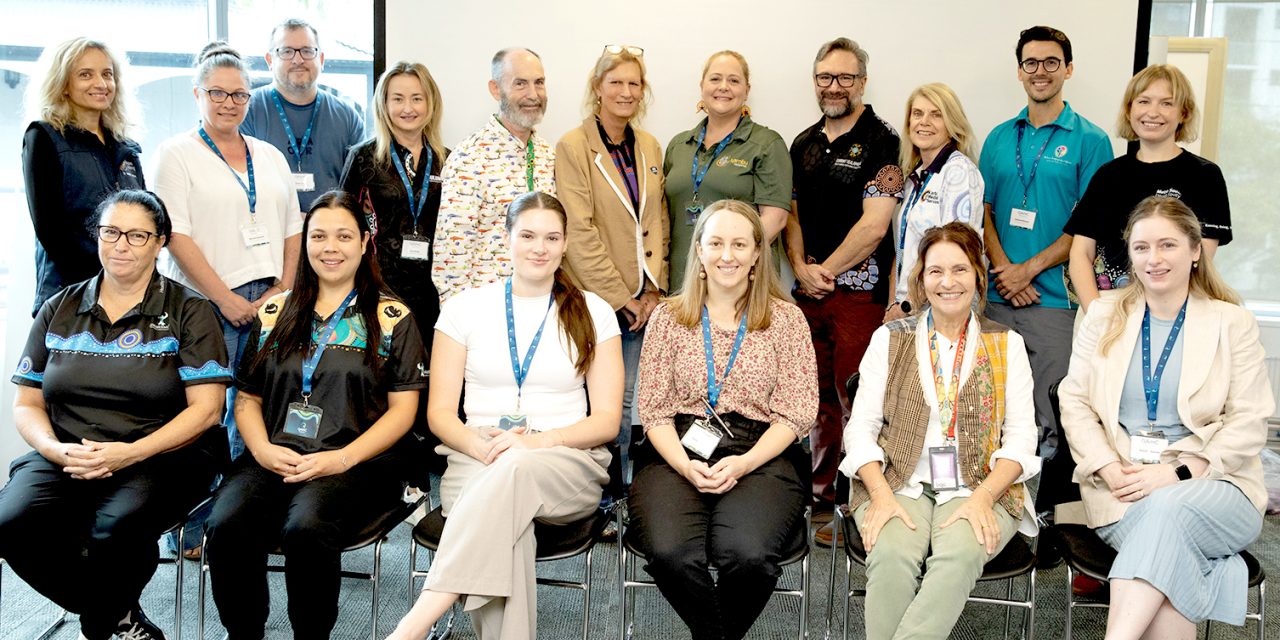
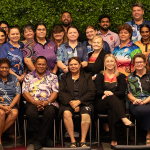
The attendees of the Clinical Leaders Forum. Image: QAIHC
QAIHC’s 2026 Clinical Leaders Forum brought together clinical leaders, health professionals and sector partners for two days of learning, discussion and collaboration on the issues shaping Aboriginal and Torres Strait Islander primary health care in Queensland.
Held at QAIHC in South Brisbane from 27–28 April, the forum featured topics highlighting the range of issues ACCHOs have to manage day to day.
These included public health, workforce development, cultural safety, immunisation, oral health, rheumatic heart disease prevention, domestic and family violence responses, point-of-care testing, HPV screening, Medicare Benefits Schedule updates, supporting flu vaccinations, the diphtheria outbreak, health data and analytics, ACCHO-led models of care, STI molecular POC testing and the START (Strep A) testing program.
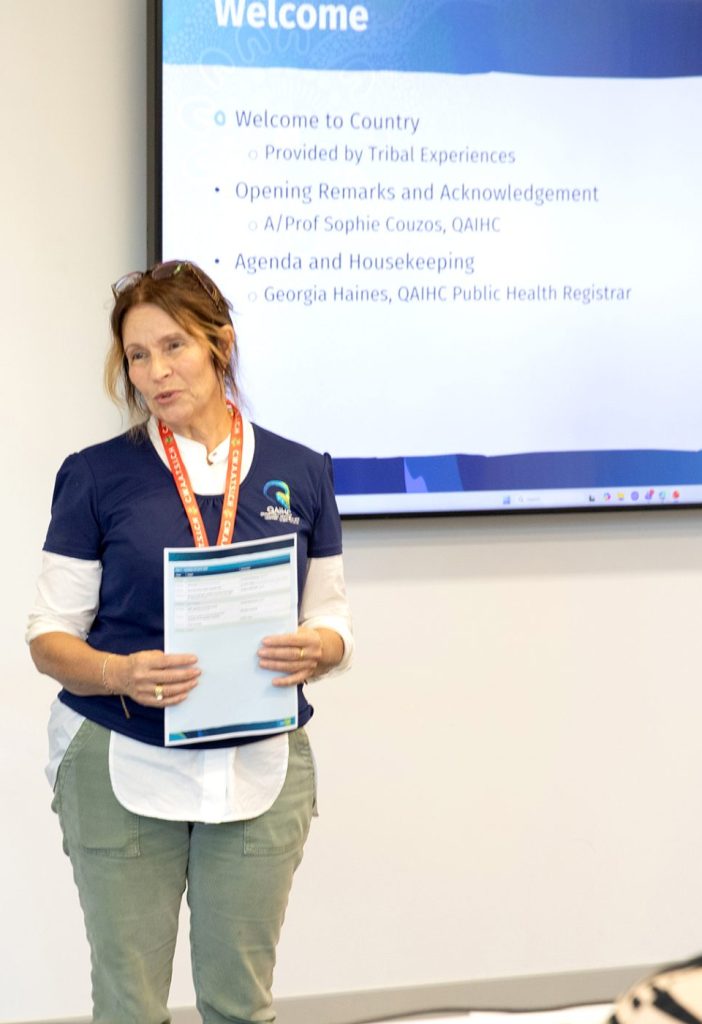
The forum opened with a Welcome to Country delivered by Tribal Experiences. QAIHC Public Health Medical Director, Associate Professor Sophia Couzos, opened the forum on behalf of Acting Chief Executive Officer Paula Arnol, with QAIHC Public Health Registrar Dr Georgia Haines facilitating.
QAIHC also delivered the forum in webinar format, extending access to participants unable to attend in person.
A/Prof. Couzos said the strong participation reflected both the depth of expertise across the sector and the strength of the ACCHO model of care.
A/Prof. Sophia Couzos at the Clinical Leaders Forum. Image: QAIHC
“One of the strengths of the Clinical Leaders Forum is the multidisciplinary workforce in attendance, which reflects the ACCHO model of care and the expertise that clinicians and health professionals share with one another,” she said.
“The success of the forum lies in the willingness of our clinical leaders to share practical knowledge, challenges and solutions for the benefit of our communities.
“This forum showed the depth of leadership across our sector and the importance of creating space for clinical voices to come together, learn from one another and drive meaningful improvements for our communities.”
The forum also included public health registrars from the Institute for Urban Indigenous Health and Queensland Health, strengthening collaboration and shared learning across the sector and broader health system.
QAIHC invited Queensland Health’s First Nations Health Office to attend and contribute to discussions around shared priorities and coordinated approaches to improving health outcomes for Aboriginal and Torres Strait Islander communities.
A key theme across the two days was the importance of solutions designed with, by and for Aboriginal and Torres Strait Islander communities. Presenters highlighted both the opportunities and the challenges facing services, e.g., workforce pressures, fragmented funding, access to specialists, dental health inequities, fuel and outreach costs, and weak data-sharing arrangements between health systems and ACCHOs.
The forum also showcased examples of innovation already occurring in community-controlled health.
These included Mulungu Aboriginal Corporation Primary Healthcare Service’s integrated dental program, Gurriny Yealamucka’s development of an ACCHO-led public health unit, and the expansion of point-of-care testing models designed to support earlier diagnosis and treatment.
A/Prof. Couzos said the forum demonstrated the value of bringing clinical leaders together to focus on practical action.
“Our services are constantly adapting to meet community need, often in complex and under-resourced environments,” she said.
“The Clinical Leaders Forum helps clinical leaders share knowledge, strengthen primary health care and improve outcomes for Aboriginal and Torres Strait Islander peoples.”
A communiqué summarising key discussions and outcomes from the forum has been prepared and will be distributed to attendees.
Discussions from the forum will continue to inform QAIHC’s sector support, advocacy and engagement with government and health system partners throughout 2026.
The Queensland Aboriginal and Islander Health Council (QAIHC) is a leadership and policy organisation. We were established in 1990 and are the peak organisation representing all Aboriginal and Torres Strait Islander Community Controlled Health Organisations (ATSICCHO) in Queensland at both a state and national level.
The QAIHC Membership is comprised of ATSICCHOs located throughout Queensland. Nationally, we represent Queensland through its affiliation and Membership on the board of the National Aboriginal Community Controlled Health Organisation (NACCHO).
Sector Leader Magazine is published by the Queensland Aboriginal and Islander Health Council (QAIHC).
We welcome submissions from our Members, Associates and Affiliates on the great work being undertaken within the Aboriginal and Torres Strait Islander Community Controlled Health Organisation Sector.
If you would like to contribute story ideas for consideration or comment on items in the current issue, please contact our Communications Team at communications@qaihc.com.au. Previous issues can be viewed online at qaihc.com.au
Aboriginal and Torres Strait Islander readers are warned that this publication may contain images or names of people who have passed away.