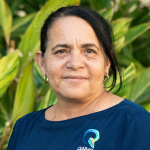
QAIHC Senior Program Officer Annie Parks provides an overview of QAIHC’s position on palliative care.
Many Aboriginal and Torres Strait Islander communities experience unusually high levels of grief due to frequent losses and near-constant Sorry Business. According to the Australian Institute of Health and Welfare, 42 per cent of Aboriginal and Torres Strait Islander respondents reported the death of a family member or close friend within the past year. These profound losses contribute to what is described as “malignant grief,” a form of cumulative grief that spans generations and significantly impacts the well-being of Aboriginal individuals and communities.1

Evidence suggests Aboriginals and/or Torres Strait Islanders often have a poor experience navigating the mainstream health system’s palliative care structures. Experiences of institutional racism and fear of the services, due to a lack of culturally appropriate and adequately trained personnel, create barriers to accessing suitable services and often contribute to their late referral to palliative care.
Palliative care admittance data from 2020-21, released by the Australian Institute of Health and Welfare, demonstrates Australia’s clear underinvestment in First Nations community-led palliative care capacity.2
Consultation with communities found most people prefer to receive palliative care at home or within their community. ACCHOs with their deep cultural knowledge and networks, are ideally positioned to provide comprehensive, culturally safe palliative care services in their community.
Key elements of this community-based palliative care framework include:
- Culturally informed and safe quality palliative care:
- Healthcare providers need to understand and respect cultural and spiritual considerations (e.g., cultural protocols, traditional medicine, passing on Country).
- Service delivery co-designed with Aboriginal and Torres Strait Islander communities to promote self-determination and reflect cultural knowledge.
- Community-led, team-based care:
- Palliative care is best delivered by a team comprising Aboriginal and Torres Strait Islander Health Workers, nurses, case managers, family members, and carers.
- Access to specialist palliative care supplements — not replaces — community-led services.
- Family-centred care:
- Palliative care focuses on the holistic well-being of the patient and their family.
- Kinship systems are recognised, ensuring the right family members are included in care discussions and decisions.
- Returning to Country:
- Place of passing holds strong cultural and spiritual significance for Aboriginal and Torres Strait Islander people. People need to be supported to pass on Country if possible.
- Challenges like access to high-risk medications and specialist services in remote areas need to be addressed to facilitate this.
- Grief and bereavement support:
- Grieving is a complex process that affects individuals emotionally, mentally, physically, and spiritually.
- Frequent losses compound grief. Support mechanisms to help families and communities through their loss.
Ensuring Aboriginal and Torres Strait Islander people have access to culturally appropriate, holistic, family-centred, community-led palliative care is essential. Given their role as trusted health providers within their communities, ACCHOs need to receive adequate funding, training, and resources to deliver these vital services. Palliative care led by ACCHOs can significantly improve the quality of life for Aboriginal and Torres Strait Islander people with life-limiting illnesses, their families, and communities. Queensland Health’s budget commitment to reshape the system supports shifting healthcare from hospitals to community health services run by ACCHOs and recognises the cost-effectiveness of ACCHOs to provide comprehensive community based health services.
Read the full position statement (PDF) on our website via the QR code.

- Parker, R., & Milroy, H. (2014). Mental illness in Aboriginal and Torres Strait Islander peoples. In P. Dudgeon, H. Milroy, & R. Walker (Eds.), Working together: Aboriginal and Torres Strait Islander mental health and wellbeing principles and practice (2nd ed., pp. 113–125). Commonwealth of Australia. ↩︎
- Australian Institute of Health and Welfare. (2023, May 25). Data tables: Admitted patient care and specialised facilities for palliative care 2020–21 [Data table]. In Palliative care services in Australia. Australian Government. https://www.aihw.gov.au/getmedia/2859d11c-bb2e-4a1c-8573-1b3daec50e3d/Data-tables-Admitted-patient-care-palliative-care-andexpenditure_2020-21.xlsx.aspx ↩︎