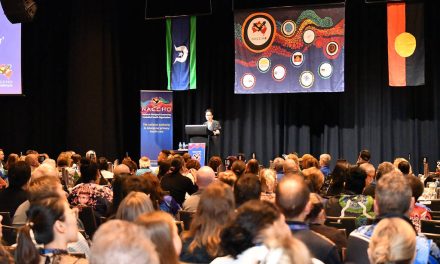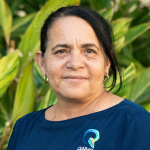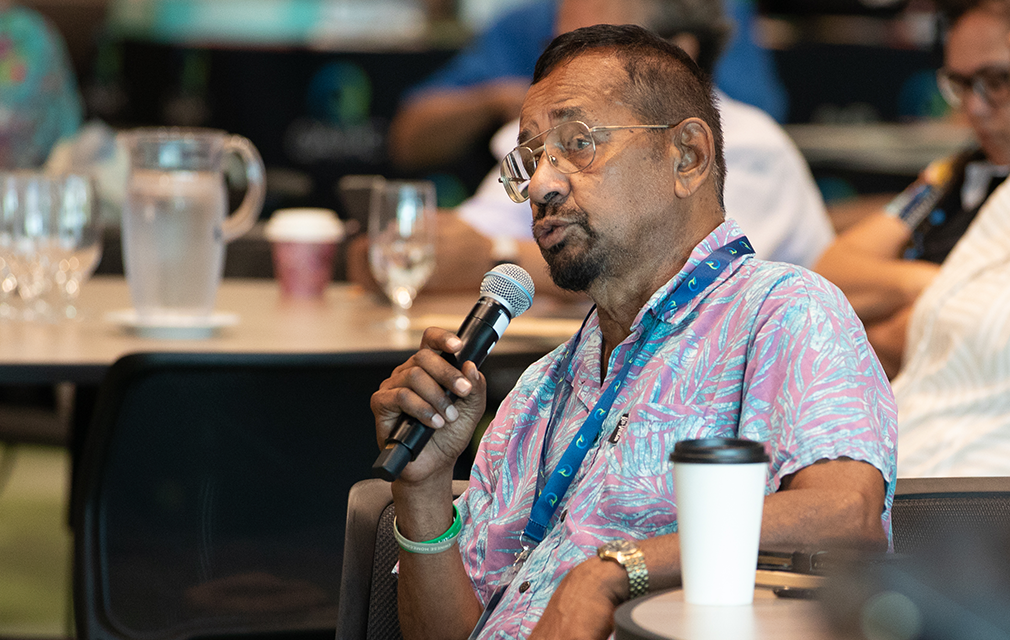
Report co-author Fr Leslie Baird at the QAIHC State Members Conference in October 2025. Image: QAIHC
A new report has revealed the Family Wellbeing Program is delivering life-changing results in Far North Queensland and other parts of northern Australia — improving mental health, reducing substance use, strengthening families, and helping people reconnect with culture and community.
The report from Central Queensland University and the Yarrabah Leaders Forum detailed five years of significant outcomes from the community-led program, which is transforming lives in Yarrabah, Cape York, the Zenadth Kes/Torres Strait, the Northern Territory and Lotus Glen Correctional Centre.
The program had more than 783 participants involved and 517 completing the program — a 66% completion rate across all sites and an impressive 90% in Batchelor, NT.
Participants report increased confidence, stronger relationships, and greater community participation. As one Yarrabah participant shared, “Family Wellbeing helped me face my fears. I’m getting more involved with other women in the community.”
Early economic evidence also points to strong value for money. Preliminary estimates suggest a return of $2.20–$6.40 in social and economic benefits for every $1 invested, reinforcing the findings of a 2021 Deloitte pilot that estimated $4.60 per $1. A final independent analysis by Deloitte partners in 2026 is expected to confirm these promising results.
Developed by Aboriginal leaders more than 30 years ago, the Family Wellbeing Program empowers participants to heal from trauma, strengthen families and lead change within their communities. The Family Wellbeing Community Report 2021–2025 called for urgent national investment to sustain and scale this success, including:
- Long-term funding for trusted local facilitators.
- Implementation of the Yarrabah 7-Pillar Strategy to support youth into jobs and education.
- Establishment of a National Family Wellbeing Centre to train facilitators and mentor the next generation of Indigenous leaders.
Father Leslie Baird said the program shows what is possible when communities lead the way.
“The Family Wellbeing Program reflects the positive changes that are possible when communities and individuals are empowered and have control over their destiny,” he said.
“The key to successfully closing the gap is to allow Aboriginal and Torres Strait Islander communities to work together to address the core issues facing their community. When we allow that to happen, we see real and lasting change.
“Our program in Yarrabah has demonstrated that when we work with our community and listen to their collective voices, we can start to address the multigenerational trauma that has impacted us so heavily since the early days of the Mission.
“There’s still so much to do, but the Family Wellbeing Program is showing positive steps forward for this community.”
The full report, Walking Together: Translating 20 Years of Family Wellbeing Research into Practice, is available here.